The most important Autobahn skill isn’t speed. It’s making your next move predictable. This guide to Autobahn driving etiquette for Americans focuses on the habits that matter most: keep right when you’re not passing, check your mirrors, and leave room for faster traffic.
It’s easy to picture Germany’s famous highway as a place where every stretch has no speed limit. In reality, limits and conditions vary. Signs may change with traffic, weather, or roadwork. Reading the road and responding calmly can make the experience feel far less intimidating.
Here, you’ll find practical guidance on lane discipline, passing, speed signs, and what to do when traffic slows. The aim is to replace familiar myths with useful habits, so you can enjoy the journey without treating speed as the goal. With preparation, the Autobahn becomes less a test of nerve and more an opportunity to experience European roads with confidence.
Key Takeaways
- Autobahn driving etiquette for americans starts with reading the traffic flow and making each lane change deliberate and predictable.
- Plan a pass, signal clearly, and return to the right when you’ve finished overtaking and there’s room.
- Don’t assume the road ahead is unrestricted. Follow posted signs and adjust your driving to traffic and conditions.
- Autobahn Adventures tours feature the latest model Porsche 911 Carrera, luxury hotels, planned experiences, and logistical support.
Autobahn Driving Etiquette for Americans: What Feels Different
Driving on the Autobahn can feel unfamiliar before the journey even begins. The challenge isn’t simply speed. It’s understanding a different traffic rhythm, noticing changing signs, and making decisions other drivers can read. For American visitors, Autobahn driving etiquette for Americans is best approached as a set of habits for staying attentive and predictable, alongside following the rules that apply to the road and conditions.
“Autobahn etiquette is considerate, predictable driving; legal requirements are the rules drivers must obey.” Courtesy can help traffic flow smoothly, but a polite habit doesn’t replace an official requirement. The Autobahn isn’t uniformly unrestricted. Posted signs and changing conditions shape the drive, so read the road rather than relying on assumptions. The Autobahn system in Germany offers background on the network and its development.
Why Autobahn habits may surprise American drivers
A familiar driving routine may not translate neatly to a different road culture. Watch for signs and changes in traffic instead of assuming the next stretch will match the last. A vehicle approaching quickly from behind, a busy lane, or roadwork ahead can all call for calm, deliberate choices. Predictability gives other drivers more time to understand your intentions. It’s a habit to build, not a test of nerve.
Etiquette versus official traffic rules
Use “etiquette” for considerate choices, such as staying alert and avoiding sudden movements. Reserve “requirement” for a rule established by German traffic law or a posted instruction. German Road Traffic Regulations (StVO) and guidance from ADAC can help you understand the rules. Requirements and signs can apply differently depending on the situation, so treat general guidance as a starting point and confirm the current requirements before your trip.
That mindset makes the drive easier to read. Stay attentive to what’s ahead, leave space for decisions, and respond to the conditions you actually encounter. You’ll spend less energy on myths and have more room to enjoy the journey.
Autobahn Lane Etiquette: Keep Movements Clear and Predictable
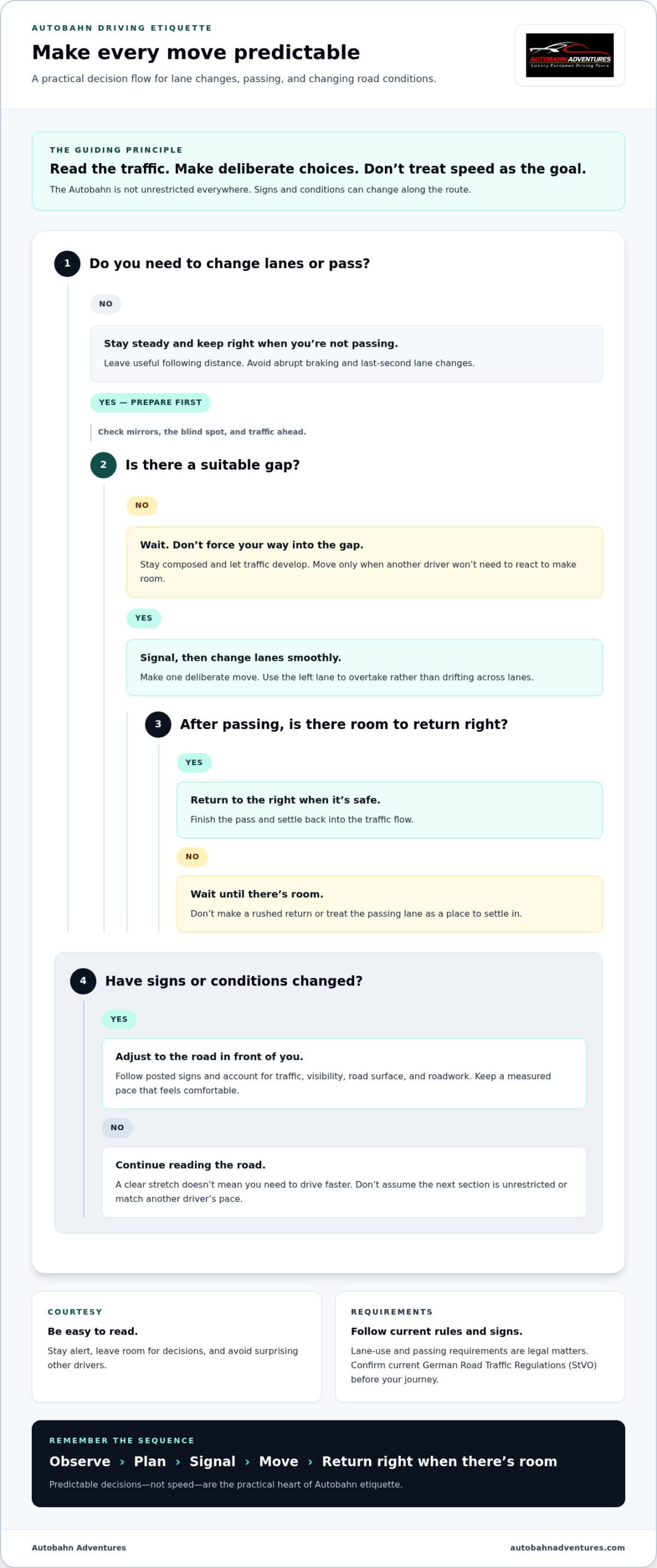
Good lane discipline is a sequence, not a split-second reaction. Observe the traffic around you, plan your move, signal, then change lanes smoothly when there’s room. This rhythm helps other drivers understand what you’re doing, especially when vehicles approach at different speeds. For Americans adjusting to a new road culture, the aim isn’t to match the fastest car. It’s to make each decision easy to read.
How to approach lane changes and passing
Before moving, check your mirrors and the blind spot on the side you intend to enter. A quick glance can reveal a vehicle closing from behind. Signal before you move, then make one deliberate lane change rather than drifting across. Plan a pass in advance, use the left lane to overtake, and return to the right when you’ve passed and there’s room. Don’t treat the passing lane as a place to settle in.
Build these steps into one calm routine:
- Observe your mirrors, blind spots, and the traffic ahead.
- Choose a gap that lets you move without forcing another driver to react.
- Signal your intention, then change lanes smoothly.
- After passing, return to the right when there’s space and it’s safe to do so.
Lane-use and passing requirements are legal matters. Confirm current German Road Traffic Regulations (StVO) before relying on general guidance for your journey.
How to share the road courteously
Keep your pace steady when traffic allows, and avoid abrupt braking or last-second lane changes. A useful following distance gives you time to respond without pressuring the vehicle ahead. If another driver is approaching quickly, stay composed and avoid competing for a gap. Let the traffic flow develop, then move when it’s clear. Courtesy is less about yielding at every moment and more about avoiding surprises.
Observe, plan, signal, move, then settle back into the flow. That short sequence captures the practical heart of Autobahn lane etiquette. For a European road journey shaped around a planned itinerary, explore a driving tour as one way to experience the roads with trip logistics arranged.
Autobahn Speed Myths: Drive to Conditions, Not a Number
The Autobahn’s reputation can make it sound as if every stretch invites unrestricted driving. That’s a misconception. Posted signs and conditions vary along the route. An open stretch can give way to a speed limit, roadwork, or heavier traffic. Respond to the road in front of you, not to a story about what the Autobahn is supposed to be.
What Americans should understand about speed expectations
There’s no single speed assumption that works for every section. Watch for signs as they change, and adjust to visibility, traffic, and the road surface. A clear road doesn’t mean you need to drive faster than feels comfortable. Another driver’s pace shouldn’t become your target. A measured speed leaves you more time to notice changes and make smooth decisions.
Autobahn driving depends on signs, conditions, and predictable decisions. Keep that principle in mind instead of treating speed as the measure of a successful drive. For autobahn driving etiquette for americans, confidence comes from reading the moment and responding steadily, not from matching the quickest traffic.
Responding calmly when traffic approaches quickly
A fast-approaching car can feel startling, especially if you’re used to a different traffic rhythm. Keep your attention on the road, check your mirrors, and avoid sudden braking or a rushed lane change. If you’re already in the appropriate lane, stay composed and let the situation develop. If you need to move, use the observation-and-signal routine from the previous section. Change lanes only when there’s a suitable gap.
Leave enough space to make a considered choice. Don’t accelerate simply because another driver is closing in, and don’t pressure the vehicle ahead to create room. A calm response keeps your actions readable and gives you time to account for signs, traffic, and changing conditions. Posted instructions still take priority, even when the traffic around you feels fast.
With the right expectations, the drive becomes an experience of awareness and flow rather than a contest. A planned itinerary is another way to discover European roads. Explore a 2027 European driving tour.
Experience Autobahn Driving with a Curated Porsche Tour
Understanding lane etiquette and speed expectations can make independent driving feel more approachable. Another option is to experience European roads through a planned driving tour, bringing the route, accommodations, and itinerary-listed experiences together. It’s a different way to discover the journey, while the habits covered in this guide remain useful behind the wheel.
Autobahn Adventures tours feature the latest model Porsche 911 Carrera, luxury hotel stays, and planned experiences. Tour logistics include vehicle insurance and luggage transportation. The European driving tours bring these elements together in a curated itinerary, with the route and planned details shaped by the tour.
What a planned driving experience can add
A planned itinerary can let you focus on the changing scenery and the experience of the drive, with accommodations and scheduled activities arranged as part of the trip. The Porsche 911 Carrera is central to the driving experience, though a specific variant isn’t guaranteed. For Americans learning autobahn driving etiquette, a tour can pair the pleasure of European roads with a clear itinerary, without making speed the point of the journey.
Plan for costs and protections that remain your responsibility. Airfare and personal expenses aren’t included. Travel insurance is strongly recommended, but Autobahn Adventures doesn’t provide it. This distinction helps you prepare with a clear view of what the tour covers and what you’ll arrange yourself.
Plan a future European driving adventure
If you’re considering a 2027 itinerary, think about the kind of driving experience and route you want from your trip. Autobahn Adventures offers curated European tours featuring the Porsche 911, luxury hotel accommodations, and planned experiences. Each itinerary brings those elements together into a complete journey.
Discuss a 2027 driving tour and start planning your European road adventure.
Carry Your Confidence Into Your Next European Drive
The most rewarding road journeys leave room to notice more than the road itself. With a calm approach to autobahn driving etiquette for americans, you can focus on the shifting scenery, the character of each stretch, and the pleasure of arriving ready to explore. Let awareness guide your pace, and allow the journey to unfold without turning speed into a goal.
A future European driving adventure can bring that measured mindset into a thoughtfully planned experience. Autobahn Adventures tours feature the latest model Porsche 911 Carrera, luxury hotel accommodations, access to legendary roads, and itinerary-listed experiences. Logistical support includes vehicle insurance and luggage transportation. A specific Porsche variant isn’t guaranteed. Airfare and personal expenses are the traveler’s responsibility, and travel insurance is strongly recommended but isn’t supplied.
Looking ahead to 2027 offers a chance to plan the kind of European journey you want to remember. Start a conversation about a 2027 European driving tour. The road ahead is best enjoyed with curiosity, composure, and confidence.
Frequently Asked Questions
Can Americans drive in Germany with a U.S. driver’s license?
Whether a U.S. license is sufficient depends on your circumstances, including your license and length of stay. Before traveling, verify current requirements through official German government guidance or the German mission serving your area. General information can help you prepare, but it can’t guarantee that your documents qualify in every situation.
Do Americans need an International Driving Permit to drive in Germany?
Whether you need an International Driving Permit depends on your license and circumstances. Confirm the current requirements with authoritative German guidance before departure. An IDP may be recommended or required in some situations, but don’t assume that general advice confirms it is legally required or sufficient for you. Arrange any required documents before travel, and carry them alongside your valid U.S. license.
What documents should Americans carry when driving in Germany?
Carry your valid driver’s license, and bring an International Driving Permit if current official guidance requires one. Requirements can vary by circumstance, so verify which documents apply to you with German authorities before your trip. Keep useful travel records, such as rental details and emergency contacts, accessible. This general guidance isn’t legal advice and doesn’t replace checking the rules that apply to your situation.
Can you use a phone for navigation while driving on the Autobahn?
German rules restrict handheld phone use while driving, so don’t handle your phone to enter directions or adjust a route while moving. Set navigation before you start, and minimize interaction while driving. If you need to change the route, wait until you can stop safely and lawfully. Check current German Road Traffic Regulations (StVO) guidance for the rules that apply to your device and situation.
What should you do if your car breaks down on the Autobahn?
If your car breaks down, stay composed and put safety first. The right steps depend on your location and circumstances, so review current official German roadside and emergency guidance before your trip. Keep relevant assistance details accessible, and follow instructions from authorities or roadside responders. Don’t rely on informal advice for emergency procedures. Preparation can help you respond more calmly if the unexpected happens.