Confidence on European roads doesn’t come from knowing every turn in advance. It comes from preparing well and staying attentive as the scenery unfolds. For travelers navigating european roads for the first time, unfamiliar signs, changing layouts, and local driving etiquette can make even a beautiful route feel daunting.
That uncertainty is understandable. Road rules and practical requirements can differ between countries, while a missed turn or busy junction can unsettle your rhythm. A little preparation helps. Review the rules for every country on your route, get familiar with the vehicle before setting off, and leave time to respond to changes without rushing. This guide explains what to prepare, what to notice on the road, and how to handle a missed turn or an unfamiliar junction calmly.
A curated driving experience can bring more structure to the journey. Autobahn Adventures pairs legendary European roads with planned experiences, luxury hotel accommodations, and tour logistics such as luggage transportation. Those arrangements don’t replace your responsibility to understand local guidance and stay attentive behind the wheel. They do let you focus more fully on the drive and the landscapes along the way.
Key Takeaways
- When navigating European roads for the first time, build confidence through preparation, observation, and unhurried decisions.
- Before changing lanes or turning, scan signs, road markings, mirrors, and nearby traffic.
- Approach roundabouts attentively and use local signs to guide your decisions.
- Before setting off, review your driving documents, rental agreement, vehicle controls, and planned route for each country.
- A curated European driving tour pairs legendary roads with the latest model Porsche 911 Carrera, luxury hotel accommodations, and experiences listed in the itinerary.
Navigating European Roads for the First Time: Start with a Calm Mindset
Even experienced drivers can feel unsettled when familiar cues give way to new signs, lane layouts, and traffic rhythms. That first-drive tension is a normal adjustment, not proof that you’re unprepared. Give yourself time to understand the road and make decisions without rushing. Prepare, observe, and adapt: these are the foundations of a composed drive.
Europe doesn’t have one uniform road system. Rules and requirements can differ by country, so check current official guidance for every country on your route before you travel. Treat broad guides as an introduction, not a substitute for local rules. For a visual introduction to sign differences, consult the Comparison of European Road Signs.
What feels different on a first European drive?
New signs may take longer to interpret, while lane arrangements and the flow of surrounding traffic may feel unfamiliar. The setting can change quickly, too, from a busy town street to an open road. Give yourself room to notice these shifts. If you need more time to process what you see, keep your attention on the road and avoid making a rushed maneuver. When something is unfamiliar, focus on the posted signs, road markings, and traffic around you.
How to build confidence before setting off
Choose a pace that suits your comfort and the conditions. There’s no benefit in rushing to match another driver’s rhythm. Before departure, agree with your companion on simple roles: who drives, who handles navigation, and how you’ll communicate an upcoming turn. Give directions clearly and early. If the route or conversation becomes distracting, pause the discussion until your attention can return to driving.
Preparation supports independent travel and helps you appreciate a thoughtfully planned route. Autobahn Adventures’ European driving tours pair legendary roads with planned experiences and premium hospitality. Tours feature the latest model Porsche 911 Carrera, luxury hotel accommodations, and experiences listed in the itinerary. A curated itinerary shapes the journey, while understanding local guidance and driving at a measured pace remain part of your preparation.
European Road Signs, Roundabouts, and Lane Choices: What to Notice
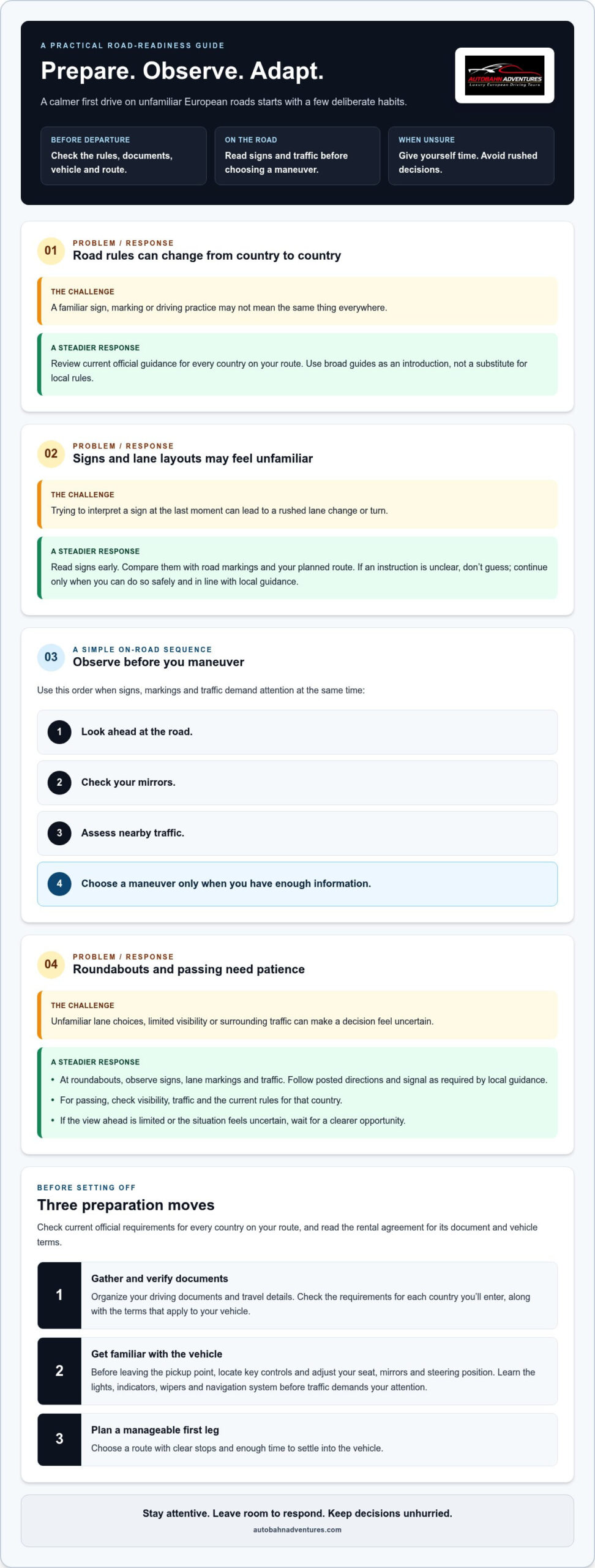
Signs, markings, and traffic can demand your attention at the same time. Use a simple sequence: look ahead, check your mirrors, assess nearby traffic, then choose a maneuver only when you have enough information. This observe-first habit gives you time to understand what the road is asking before changing lanes, turning, or entering a junction.
Read signs and markings in their national context. Europe’s road systems are not identical, so don’t assume a familiar symbol or painted line carries the same meaning everywhere. If you’re navigating european roads for the first time, focus on learning the guidance for the countries on your route rather than trying to memorize every sign across the continent.
How to approach unfamiliar signs and road markings
Before travel, review official sign and road guidance for each country you’ll visit. On the road, read signs early and compare them with lane markings and your planned route. Advance notice gives you more time to choose the right lane without making a last-second move. If a marking or instruction is unclear, don’t guess. Continue only when you can do so safely, following the applicable local guidance.
How to handle roundabouts and passing decisions
Approach a roundabout with time to observe its signs, lane markings, and surrounding traffic. Follow posted directions, signal as required by local guidance, and avoid hurried lane changes. Passing also calls for patience. Check visibility, traffic, and the current passing rules for that country before deciding. If the view ahead is limited or the situation feels uncertain, wait for a clearer opportunity.
A German Autobahn drive has its own context, but its practices are not universal across Europe. Wherever you travel, observe first, choose a lane that fits your route and local guidance, and check current official passing rules for each country. The goal is not to react to every vehicle around you. It is to make deliberate choices with a clear view of the road.
If a planned European drive is part of your travel, you can discuss a curated driving experience with Autobahn Adventures while keeping local road guidance at the heart of your preparation.
How to Prepare for Your First European Drive: A Simple Checklist
A clear sequence turns a long list of preparations into manageable steps. When navigating european roads for the first time, focus on what you need before departure, what to set up before moving, and how to respond if plans change. A good first-drive plan means knowing the route, the backup, and the next stop.
Before departure: documents, vehicle, and route
Work through this routine in order. Requirements vary, so verify current official guidance for every country on your route and read the rental agreement for its document and vehicle terms.
- Gather and verify documents. Organize your driving documents and travel details. Check that you meet the requirements for each country you’ll enter, as well as the terms that apply to your vehicle.
- Get familiar with the vehicle. Before leaving the pickup point, take time to locate key controls and adjust the seat, mirrors, and steering position. Learn to operate the lights, indicators, wipers, and navigation system before traffic demands your attention.
- Plan a manageable first leg. Choose a route with clear stops and enough time to settle into the vehicle. Set your destination and review the route before moving. Save the route for offline use where possible, or keep a paper map as a backup.
- Make a final readiness check. Confirm that you have what you need, your navigation is ready, and you know where the first stop is. If anything remains unclear, take care of it before setting off.
During the drive: navigation, pauses, and route changes
Listen for navigation cues early, but keep your attention on signs, lane markings, and traffic. If a direction comes too late to follow comfortably, don’t make a sudden maneuver. Continue safely, then stop in a suitable place before reviewing the route or entering a new destination. A missed turn is a manageable change of plan, not a reason to rush.
Build pauses into the journey, especially on a first drive. If your concentration or confidence begins to fade, take a break at a safe stopping place before continuing. Use the pause to check the next stretch of the route and reset your attention.
Preparation makes the road feel more approachable, whether you’re planning independently or considering a curated European driving experience. To discuss a planned tour pairing legendary roads with itinerary-listed experiences and premium hospitality, get in touch with Autobahn Adventures.
From First Drive to Curated European Road Adventure
Knowing how to read the road, follow local guidance, and respond calmly to a change of plan remains valuable whether you travel independently or join a curated tour. For anyone navigating european roads for the first time, a thoughtfully arranged itinerary can add structure without replacing the driver’s attention or responsibility behind the wheel.
When a curated driving experience may suit a first-timer
A curated tour can suit travelers who want the pleasure of a European drive alongside planned experiences and premium hospitality. Autobahn Adventures tours feature the latest model Porsche 911 Carrera, legendary roads, luxury hotel accommodations, and experiences listed in the itinerary. Luggage transportation is also handled as part of the tour logistics, so guests can focus more fully on the journey between destinations.
Explore the European driving tour formats to see how different itineraries shape the experience. The tour price covers the items set out for the selected itinerary, not every possible trip expense. International airfare and personal expenses are not included. Review the itinerary and travel details as you decide what kind of trip suits you.
Make the next step feel straightforward
Start with the kind of planning you prefer. Do you want to arrange each stop yourself, or would you enjoy having roads, hotels, and itinerary-listed experiences brought together in a curated journey? Either approach can be rewarding. Choose the one that lets you enjoy the drive while feeling comfortable with the level of planning around it.
The European tour experience brings driving and planned hospitality together. Whatever you choose, keep learning country-specific rules and allow yourself time to settle into unfamiliar roads. For a personal conversation about a European driving experience, contact the Autobahn Adventures team.
Let the Journey Begin with Confidence
Your first European drive doesn’t need to feel effortless from the first turn. Confidence often grows as you settle into the car, recognize the rhythm of the road, and give yourself space to make thoughtful decisions. Let that first stretch be an introduction, not a test. Each journey can bring more ease and a deeper appreciation for the places unfolding beyond the windscreen.
As you plan, consider the kind of experience you want to carry home: a route shaped entirely by your own choices, or a more curated journey that lets you focus on the pleasure of the drive and the discoveries along the way. For travelers navigating european roads for the first time, either path can begin with the same calm, attentive approach.
Ready to explore a curated European driving experience? Discuss your journey with the Autobahn Adventures team.
Frequently Asked Questions
Is it difficult to drive in Europe for the first time?
It can feel demanding at first, but unfamiliarity doesn’t mean you can’t manage the drive. When navigating European roads for the first time, allow extra attention for signs, junctions, and local traffic patterns. Familiar controls and road awareness still apply. A short, straightforward initial journey can help you get used to the car and surroundings before taking on a more complex route.
Can I use my phone for navigation while driving in Europe?
You can use a phone to plan a route, but rules for using devices while driving vary by country. Check current official guidance for every country on your itinerary. Enter your destination and adjust settings before setting off. Avoid handling the phone while the vehicle is moving. If you need to change the route, stop in a safe, permitted place first.
What should I do if I miss a turn on an unfamiliar European road?
Stay on your current route if you can do so safely, and let your navigation recalculate. Don’t brake suddenly, reverse, or cross lanes to recover the turn. Wait for a safe place to stop before checking the map or entering a new destination. A missed turn may add time, but a calm reroute is safer than trying to correct it at the last moment.
Do driving rules stay the same across European countries?
No. Road rules and requirements can change when you cross a border, even if the road looks similar. Before travel, check current official guidance for each country you’ll drive in. Pay particular attention to requirements that affect your journey, including local driving rules, signs, and road-use arrangements. Don’t assume advice for one country applies throughout your trip.
How should I prepare for driving a rental car in Europe?
Read the rental agreement and verify that your driving documents meet the requirements for every country on your route. At pickup, take a moment to learn the vehicle’s controls, adjust your seat and mirrors, and set your navigation before departure. Check how the rental agreement handles travel between countries. This preparation helps you focus on the road rather than unfamiliar controls.
Is a paper map useful when navigating European roads?
Yes. A paper map can provide a useful overview if your phone loses signal, runs out of power, or gives confusing directions. It can also help you understand where your next stop sits in relation to the wider route. Use it while parked or ask a passenger to check it. On the move, keep your attention on the road and follow current signs.