
The sweeping alpine curves and unrestricted autobahn corridors of Europe promise ultimate motoring bliss, yet a sudden toll fine or an unexpected low-emission zone can instantly shatter the romance. What are the biggest mistakes travelers make when taking the wheel abroad? The truth is that avoiding common european road trip mistakes begins long before departure. True driving freedom requires an intimate understanding of foreign regulations, local permits, and vehicle demands before you ever turn the key.
You already know that driving across the continent should feel effortless, exhilarating, and deeply rewarding. You deserve open horizons rather than border headaches, unexpected penalties, or mechanical stress. In this connoisseur’s checklist, you will discover how to sidestep costly citations, conquer legendary switchbacks like Susten Pass and Grimsel Pass with confidence, and eliminate the fatigue of congested transit corridors. From mandatory motorway vignettes to masterclass route pacing, here is your definitive preview to an unforgettable 2027 European journey.
Key Takeaways
- Master cross-border compliance by securing mandatory motorway vignettes and deciphering Italian ZTL camera zones before crossing frontiers.
- Avoid unexpected alpine detours by aligning your travel calendar with the live seasonal openings of high-altitude passes like Furka Pass.
- Discover the art of European route pacing, avoiding common european road trip mistakes that transform dream drives into exhausting transit slogs.
- Learn how navigating tight historic villages requires precise vehicle choices and realistic spatial planning for European garage infrastructure.
- Explore how turnkey luxury touring eliminates logistical friction, ensuring your driving holiday delivers pure, uncompromised performance.
Cross-Border Formalities and Local Driving Regulations: Essential Rules
European borders feel practically invisible on modern motorways. Yet legal boundaries remain as sharp as ever. A single border crossing instantly changes your regulatory landscape, from highway access permits to speed monitoring systems. A critical part of avoiding common European road trip mistakes is recognizing that each nation operates its own distinct enforcement matrix. Overlooking these requirements quickly turns an exhilarating drive into a logistical quagmire of roadside stops and automated mail fines.
Mandatory Permits and Toll Pass Systems
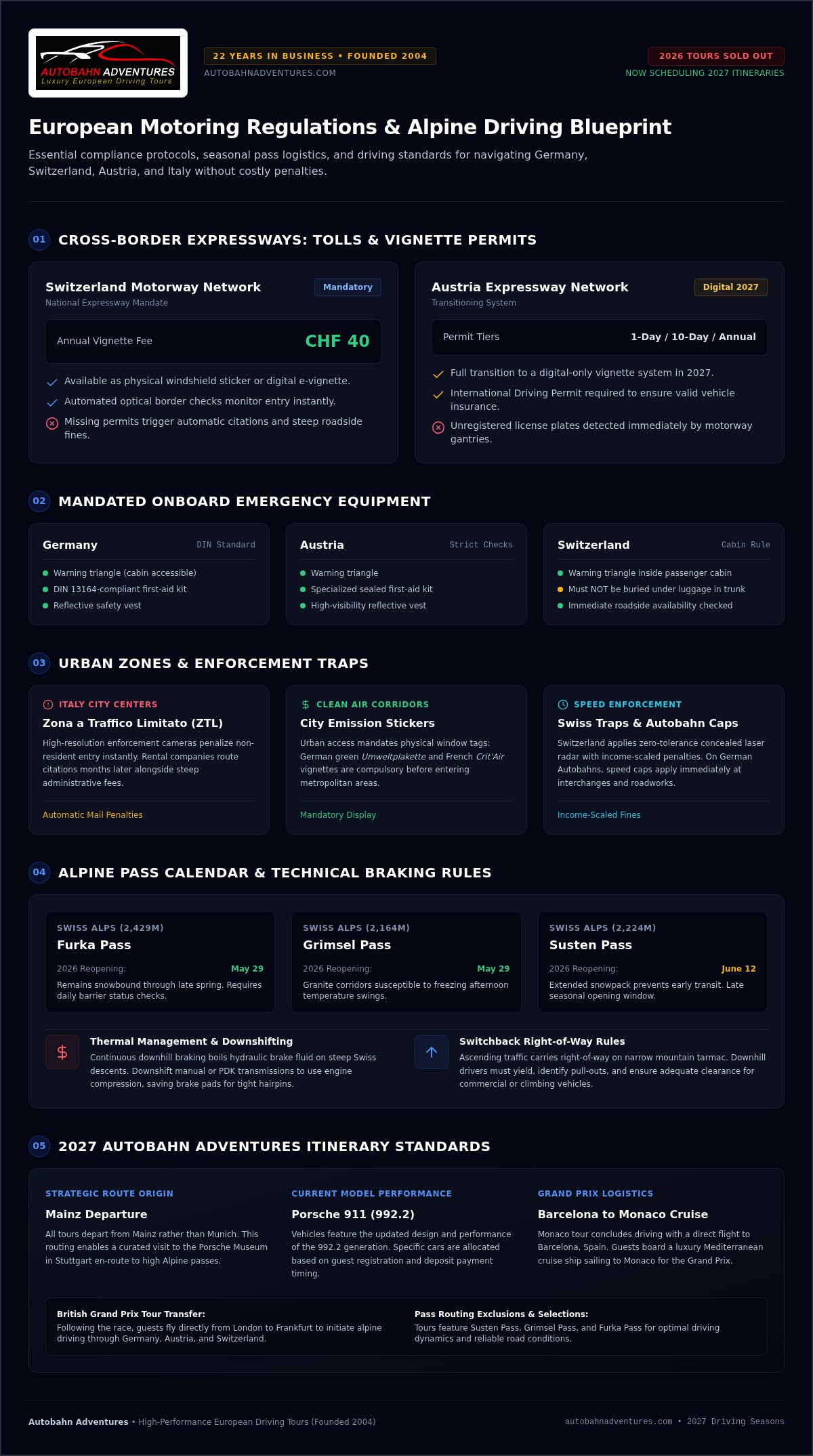
Entering Switzerland or Austria requires immediate toll compliance before using national expressways. Switzerland mandates an annual motorway vignette priced at CHF 40, available as a physical sticker or a digital e-vignette. Austria requires a vignette as well, offering 1-day, 10-day, and annual options, with the country transitioning to a digital-only vignette system for 2027. Driving onto these motorways without an active permit triggers automated camera detection and steep fines.
Documentation requirements demand equal diligence. Securing a verified International Driving Permit alongside your valid domestic driver’s license ensures legal compliance across border lines. Without it, you risk invalidating your vehicle insurance in countries like Italy and Austria. Additionally, you must carry mandated emergency equipment inside the passenger cabin:
- Germany: Warning triangle, DIN 13164-compliant first-aid kit, and reflective safety vest.
- Austria: Warning triangle, specialized first-aid kit, and high-visibility vest.
- Switzerland: Warning triangle readily accessible within the vehicle cabin.
- Urban Zones: French Crit’Air clean-air vignettes and German green Umweltplakette stickers for low-emission city centers.
Deciphering City Zones and Strict Speed Traps
Historic town centers present hidden pitfalls for unfamiliar drivers. In Italy, entering a Zona a Traffico Limitato (ZTL) without resident authorization instantly triggers high-resolution cameras. These violations generate hefty fines that car rental agencies forward months later, complete with processing surcharges.
Speed monitoring requires razor-sharp awareness. Swiss authorities enforce zero-tolerance speeding rules using concealed laser traps, where minor infractions carry severe, income-scaled penalties. On the German Autobahn, freedom comes with strict conditions. While rural sections may lack blanket limits, speed caps apply immediately near interchanges, construction zones, and urban approaches. When avoiding common european road trip mistakes, never assume signage is optional; European precision traffic systems record every kilometer.
Alpine Route Planning: Conquering Historic Mountain Passes Without Incident
High alpine ribbons offer some of the most intoxicating driving tarmac on earth. Towering granite peaks and cascading waterfalls frame every bend. Yet mountain passes remain unforgiving environments that humble unprepared drivers. When avoiding common european road trip mistakes, mastering elevation dynamics is essential. A closed summit corridor or overheated brake system will bring your grand journey to an abrupt halt.
Seasonal Openings and Altitude Weather Swings
Never rely on generic seasonal dates. Snowpack dictates access. Legendary passages like Furka Pass, Grimsel Pass, and Susten Pass frequently remain snowbound until late spring or early June. In 2026, Furka and Grimsel reopened on May 29, while Susten remained closed until June 12. Weather shifts rapidly at 2,000 meters. A radiant morning valley climb can transform into blinding sleet, thick cloud banks, and freezing temperatures by early afternoon. Always check morning road barrier reports, consult official EU driving regulations regarding seasonal tire mandates, and identify lower-elevation valley routes beforehand.
Braking Discipline and Switchback Etiquette
Gravity places severe thermal stress on mechanical components. Long downhill gradients through the Swiss Alps will boil brake fluid if you ride the pedal continuously. Downshift your transmission instead. Allow engine compression to manage your descent speed, preserving your pads for tight hairpin entries.
Mountain roads demand refined etiquette and constant situational awareness. Keep these alpine fundamentals front of mind:
- Ascending Traffic: Yield the right of way to ascending heavy vehicles and yellow postal buses sounding their three-tone horn on blind corners.
- Pullout Etiquette: Utilize paved passing bays to let faster local traffic slip by cleanly without pressure.
- Switchback Positioning: Maintain your lane discipline around tight hairpins; never cut across the opposing lane blind.
Executing an effortless mountain traverse takes refined preparation. If you prefer conquering these iconic peaks with expertly arranged waypoints and professional route management, you can plan your upcoming journey with seasoned alpine specialists.
Pacing Your Journey: Why Over-Scheduling Destroys the Driving Experience
Grand touring across Europe is an art form. It requires balancing high-speed exhilaration with unhurried indulgence. Yet many drivers treat their itinerary like a high-stakes endurance rally. They map sprawling daily routes using simple point-to-point distances, only to discover that sixty miles of winding alpine passes take three times longer than expressway cruising. Avoiding common european road trip mistakes means trading grueling seat time for curated moments of genuine connection and sensory joy.
Realistic Mileage Versus Mountain Hours
Plan your driving days by hours behind the wheel rather than total kilometers. Standard navigational apps consistently underestimate real-world conditions on European secondary roads. A scenic country route often presents unexpected slowdowns, including slow-moving agricultural machinery, packs of road cyclists, and single-lane stone bridges through medieval hamlets. Classic European driving tips emphasize adjusting to these local dynamics rather than rushing through them.
To preserve your stamina and keep every mile thrilling, adopt these proven pacing standards:
- Cap Mountain Driving: Limit high-altitude switchbacks to three or four hours of active driving per day.
- Factor Flow Delays: Add a thirty percent time buffer for unexpected construction stops or scenic pullouts.
- Avoid Daily Relocations: Moving hotels every single night creates unnecessary packing fatigue and mental friction.
Balancing Exhilaration With Leisure
Exhaustion dulls the senses. If you spend eight hours battling congested corridors and demanding switchbacks, you arrive at your destination drained rather than inspired. True connoisseurs design itineraries that breathe. Spend your late afternoons strolling through sun-drenched vineyards, sampling local artisan delicacies, or unwinding in world-class alpine spas before dinner.
This effortless balance defines every journey in our collection of luxury driving tours. Instead of wrestling with rigid schedules, you experience seamless days crafted for performance and relaxation. When you are ready to explore the continent with masterfully paced routing, reserve your 2027 driving experience today.
Vehicle Selection and Logistical Pitfalls: Self-Planning Versus Curated Touring
Your vehicle defines your relationship with the road. Choosing an underpowered rental hatchback strips the drama from soaring mountain passes and unrestricted autobahns. Conversely, selecting an oversized SUV makes maneuvering through centuries-old stone archways and compact subterranean parking garages an ordeal. A fundamental rule of avoiding common european road trip mistakes is matching your machine to the terrain without sacrificing comfort, storage, or peace of mind.
The Performance Vehicle Rental Dilemma
Independent luxury travelers often face harsh realities at airport rental desks. Traditional agencies rarely guarantee a specific high-performance model, assigning "or similar" alternatives instead. Securing an authentic sports car through third parties brings excessive security deposits, strict cross-border driving bans, and rigid mileage caps. Compact performance cockpits also present severe luggage limitations, forcing travelers into impractical packing compromises just to close the rear decklid.
The Curated Grand Touring Advantage
Eliminating these friction points transforms a demanding logistics puzzle into pure driving exhilaration. A turnkey touring structure solves the performance car conundrum entirely. Rather than wrestling heavy suitcases into a tight sports car boot, dedicated luggage transfer vehicles transport your belongings seamlessly between five-star properties, leaving your cabin clear and responsive.
This effortless approach unlocks the continent in its purest form:
- Guaranteed Precision Machinery: Drive the iconic Porsche 911 on every leg, with vehicles allocated based on when guests register and pay their deposit.
- Seamless Northern Gateways: Tours depart effortlessly from historic Mainz, stopping at the world-renowned Porsche Museum in Stuttgart en-route to high alpine switchbacks.
- Total Logistical Freedom: Border clearances, toll transponders, route pacing, and luxury accommodations are handled completely in advance.
With 22 years of luxury European touring expertise since 2004, and with all 2026 dates fully booked, guests looking forward to upcoming 2027 itineraries discover how effortlessly the continent unfolds. True grand touring should never feel like work. When you choose to travel with Autobahn Adventures, every pass, permit, and boutique stay is masterfully orchestrated, ensuring avoiding common european road trip mistakes is as simple as enjoying the open road.
Embrace the Continental Open Road With Complete Confidence
Sweeping alpine summits and unrestricted autobahns should deliver sheer exhilaration, never administrative strain. Mastering cross-border toll compliance, respecting mountain pass weather windows, and balancing daily driving hours are essential for effortless grand touring. Ultimately, avoiding common european road trip mistakes comes down to meticulous preparation, intelligent pacing, and respecting local driving customs.
Autobahn Adventures brings 22 years of touring excellence since 2004, eliminating every logistical friction point from your holiday. We handle route curation, border permits, luggage transfers, and five-star accommodations so you can focus entirely on the open road. Behind the wheel of a pristine Porsche 911, legendary ribbons of asphalt become pure poetry. With all 2026 departures fully booked, now is the ideal moment to secure your vehicle for the upcoming season. Explore our 2027 luxury European driving tours and reserve your place on an unforgettable journey.
Frequently Asked Questions
What documents do Americans need to drive legally in Europe?
American drivers must carry a valid domestic driver’s license alongside an International Driving Permit. You must also present your original passport and valid vehicle insurance paperwork at every international border crossing. Without an official permit, local traffic authorities may deem your domestic license invalid. This oversight instantly cancels collision coverage in several European nations.
Can I drive any rental car across European international borders?
No, standard rental agencies frequently restrict which vehicles can cross specific country lines. Premium sports cars, executive sedans, and luxury convertibles often face strict geographical limitations or steep cross-border surcharges. In addition, you must declare every country on your planned itinerary at pick-up to avoid invalidating your rental policy entirely.
How do highway vignette tolls work in Switzerland and Austria?
Switzerland requires drivers to purchase an annual toll vignette priced at CHF 40 before entering highway corridors. Austria utilizes short-term options, including 1-day and 10-day passes, before shifting exclusively to digital registrations for the 2027 season. An essential part of avoiding common european road trip mistakes is securing these permits in advance, preventing automated enforcement cameras from issuing immediate roadside fines.
What is the best way to handle luggage when driving a sports car in Europe?
Sports cars feature tight cockpits and compact front boots that rarely accommodate standard hard-shell luggage. Trying to force multiple large bags into the rear seats restricts your rearward visibility and risks scuffing fine leather interiors. The most practical solution is arranging separate luggage portage, allowing high-performance vehicles to remain uncluttered and responsive along every mountain pass.
Why do experienced travelers choose curated luxury driving tours over self-planned road trips?
Self-planned journeys burden travelers with complex route pacing, vehicle deposit negotiations, and hidden foreign traffic regulations. Curated touring eliminates these logistical hassles entirely. Autobahn Adventures brings 22 years of expertise since 2004, orchestrating seamless itineraries featuring the iconic Porsche 911, five-star accommodations, and dedicated luggage transfers for upcoming 2027 departures starting directly from Mainz.
What makes mountain pass driving on Furka, Susten, and Grimsel Pass unique?
These legendary Swiss routes showcase massive elevation shifts, technical hairpins, and sweeping granite vistas. Mastering them requires attentive gear selection, disciplined engine braking, and constant awareness of sudden altitude weather shifts. Because high-altitude snow clearing dictates seasonal access well into early summer, avoiding common european road trip mistakes on these passes requires confirming operational status before your morning ascent.